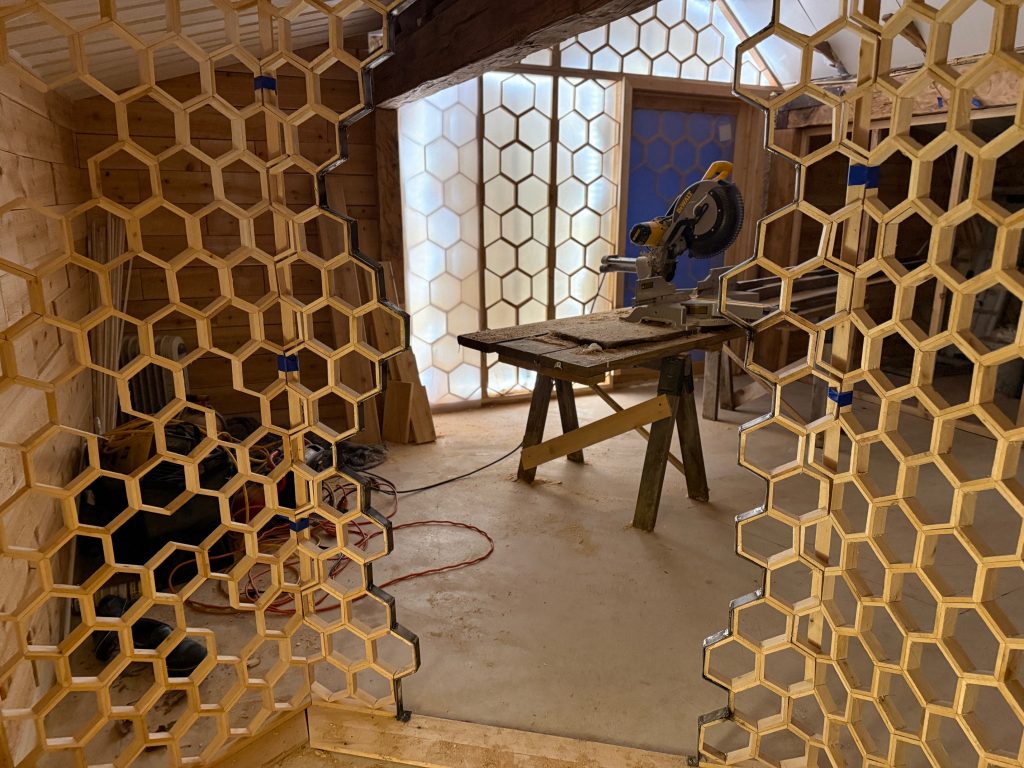
Apitherapy inhalation, or beehive air therapy, uses the filtered air from an active hive to treat respiratory and neurological issues.
Core Benefits
- Respiratory Support: Hive air contains propolis, beeswax, and nectar aerosols that soothe inflamed airways. It is used as a supportive treatment for asthma, bronchitis, and chronic sinusitis.
- Immune Boosting: Naturally occurring antimicrobial compounds in the air can reduce airway inflammation and improve overall lung function.
- Neurological Relief: The low-frequency humming (approx. 250–450 Hz) and sweet floral scents have a calming effect on the nervous system, helping to manage stress, anxiety, and PTSD.
- Faster Absorption: Inhaling these compounds allows them to bypass the digestive tract, entering the bloodstream directly through the lungs for more immediate effect.
Effectiveness Testimony
“A beehive is considered nature’s pharmacy. There have been benefits for people who have respiratory illness, asthma… and people with stress and anxiety. Even people with PTSD… they actually use this a lot with veterans.”
— Jen Pardee, co-founder of Pardee Bees in Abilene, Texas, discussing the successes seen at their “bee therapy house”.
Scientific Context (2026)
Recent clinical data indicates that apitherapy can significantly improve spirometry (lung function) test results. You breathe into a mouthpiece connected to a device (a spirometer) that records the volume and speed of your breath, providing objective data on your lung capacity and airflow. In the U.S., specialized centers like Honeycomb Cottage in Minnesota and Pardee Bees in Texas now offer these services as a wellness practice.
Safety Note: While generally safe, this therapy is not recommended for those with bee allergies. Always consult a healthcare professional before trying new treatments.