Where does propolis come from?
The word “propolis” has its roots in ancient Greek. It combines “pro”—meaning in front of—and “polis”, which means city. Taken together, the term literally translates to “defender of the city.” For bees, that “city” is their hive. The name beautifully reflects how bees use propolis—a sticky, resinous substance—to seal gaps, protect their home from intruders, and create a fortress of safety and cleanliness around their colony.
The observation of tree resins by prehistoric and indigenous peoples highlights a profound early understanding of nature’s pharmacy. These sticky, aromatic substances, exuded by trees to seal wounds and defend against pathogens, have been harnessed for millennia as medicines, preservatives, and sacred offerings.
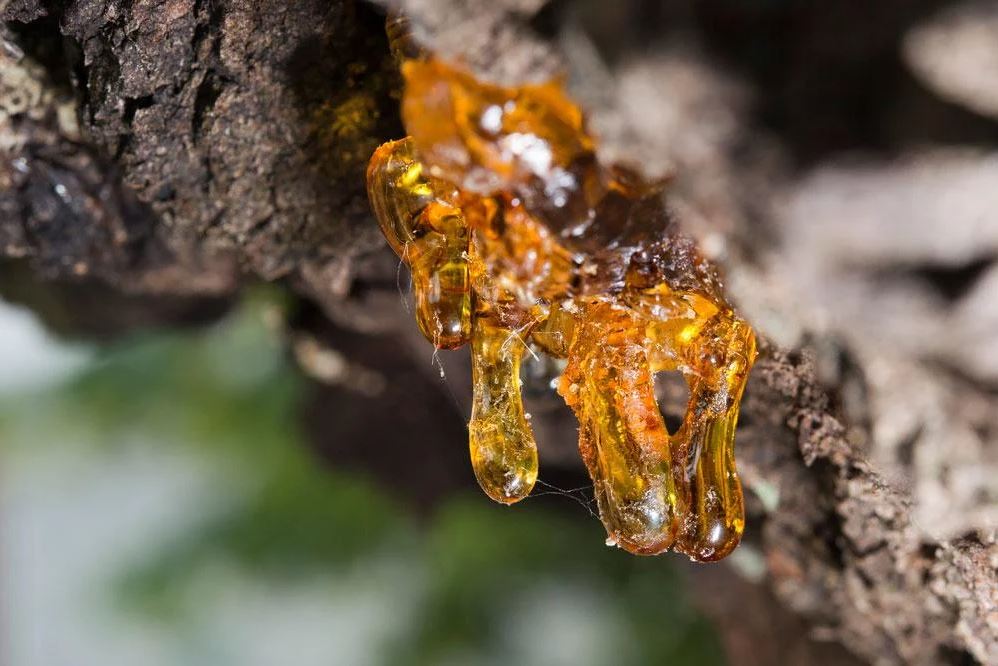
Modern science has validated many of these traditional uses, particularly their antibacterial properties. The comparison of tree resin to propolis (bee glue) is particularly apt. Propolis is essentially a bee-processed mixture of tree resins (often from poplars, conifers, or similar sources) blended with beeswax, saliva, and enzymes. Bees collect raw resins for their inherent antimicrobial qualities to sterilize the hive, much like how ancient humans used them directly. Both raw tree resins and propolis share broad-spectrum antibacterial, anti-fungal, and anti-inflammatory effects, though propolis benefits from additional bee modifications that can enhance potency in some contexts. Research shows tree resins (e.g., from spruce or pine) and propolis both excel against gram-positive bacteria like Staphylococcus, with applications in wound healing, oral care, and infection control.
Overall, these natural resins bridge ancient wisdom and contemporary science, offering promising alternatives or complements to synthetic antimicrobials — especially amid rising antibiotic resistance. Their enduring legacy reminds us how closely human ingenuity has always intertwined with the natural world.
Thanks to its high antimicrobial content propolis creates the most sterile environment in nature!
Take a walk in the woods and notice the air. Therapeutic resin is spread naturally when the sun warms up a conifer tree which diffuses its aroma into the environment. That is why a walk in the woods is known to relieve stress or anxiety and stimulates well being.